

Every organization that adopts AI also inherits the assumptions, perspectives, and priorities of the people who designed it.
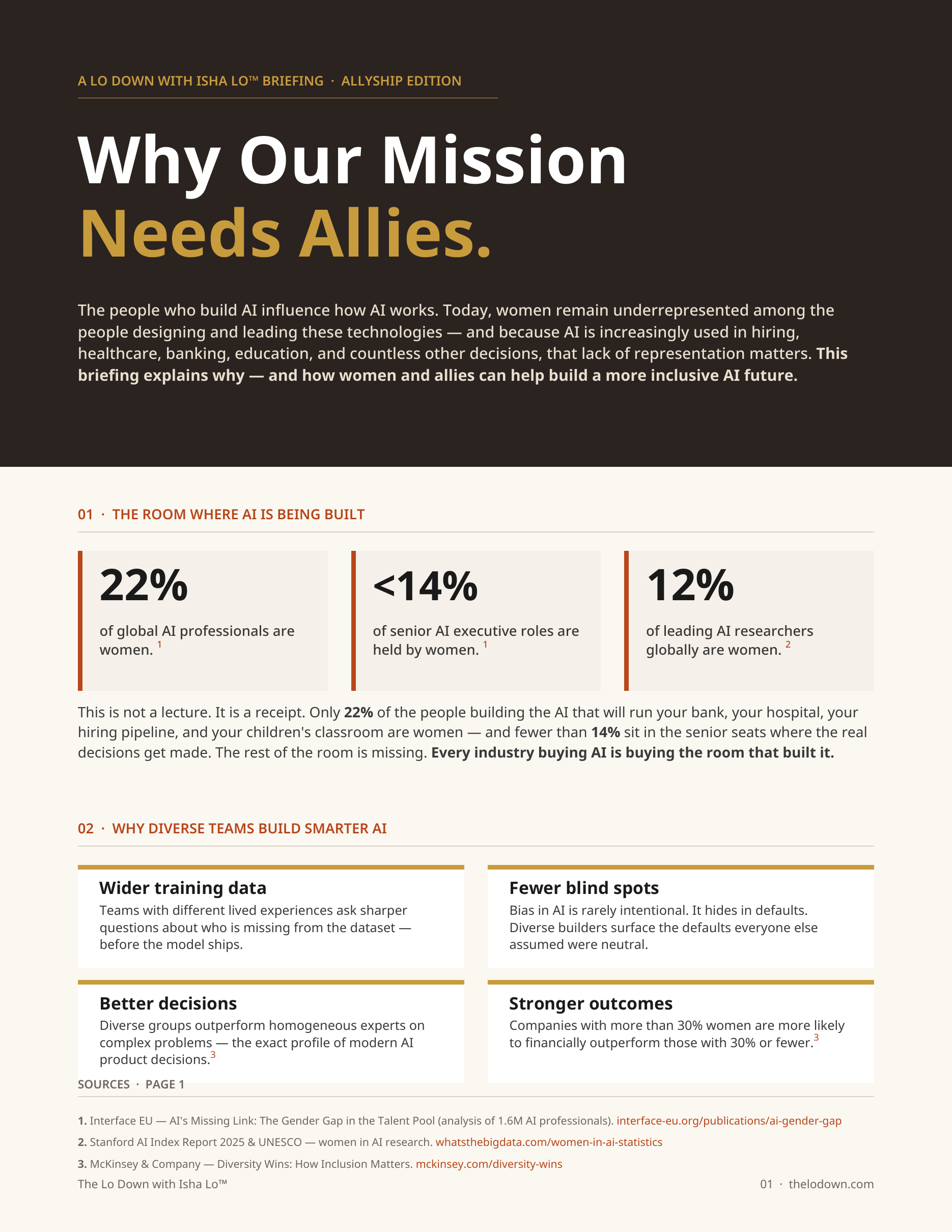
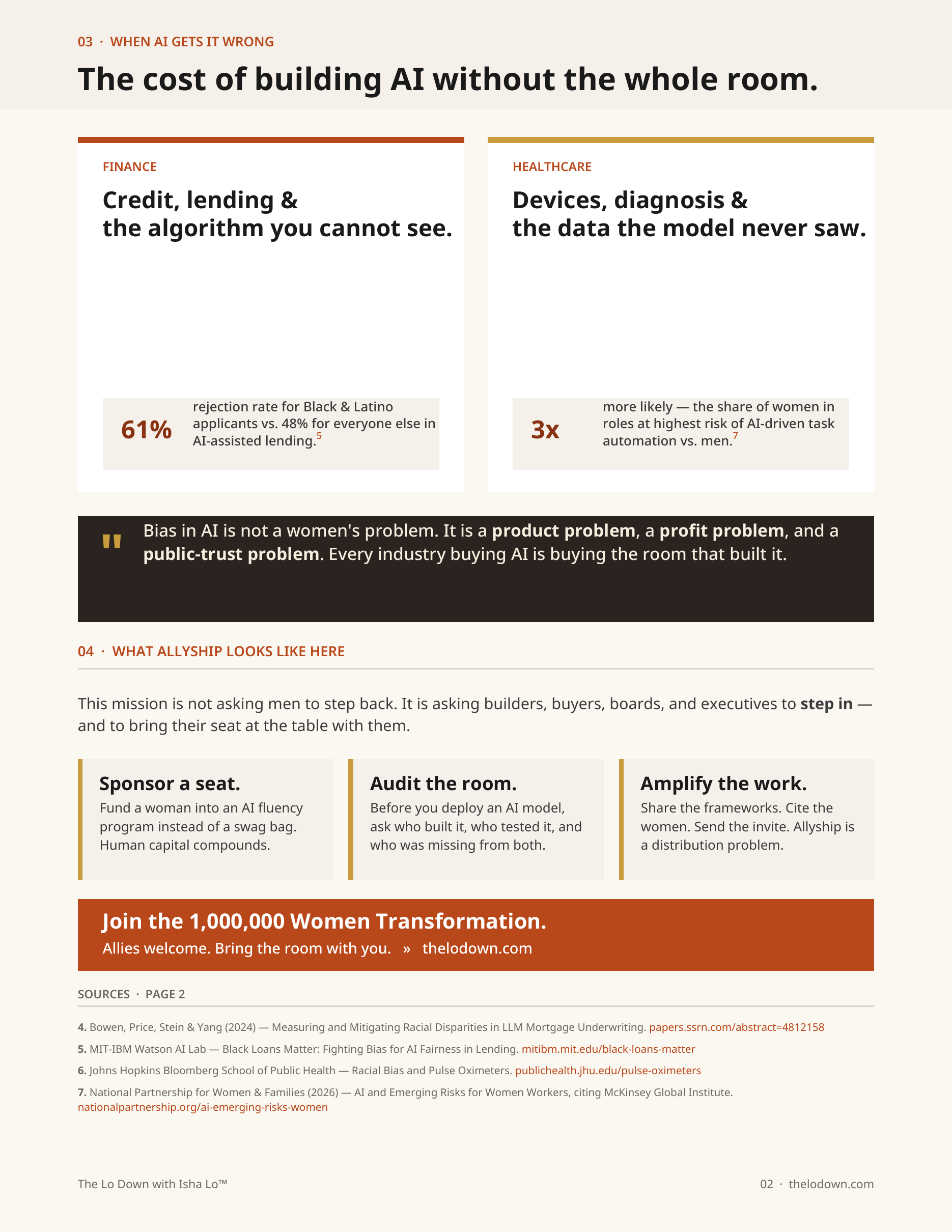
Women are standing in the direct path of AI disruption.
In high‑income countries, women’s jobs are significantly more exposed to AI‑driven automation than men’s, with women often around three times more likely to hold roles at the highest level of risk. At the same time, women remain underrepresented in AI and data careers, making up only a minority of the global AI workforce.unu+2
Research from the UN system and others finds that this underrepresentation shows up inside the technology itself: in one review, roughly 44% of AI systems demonstrated gender bias, often linked to homogeneous, male‑dominant development teams. Analyses from edX and similar bodies note that when fewer women work in AI and STEM, fewer women influence how these systems are built, governed, and depoyed.
Taken together, the pattern is clear: women are more likely to be in roles exposed to AI‑driven automation, while being underrepresented among the people designing and directing the very systems reshaping their work and income. Changing that pattern is not women’s work alone it requires women, men, and allies choosing to build a more equitable, human‑centered AI future side by side.
Join the 1,000,000 Women mission as a participant, partner, or ally because the future of AI should be built with all of us, not for some of us.
AI is becoming part of everyday life across the globe.
It is transforming how we live, learn, work, build businesses, access healthcare, manage our finances, and raise our children. Every time we use AI, we inherit more than technology. We inherit the perspectives, values, priorities, assumptions, and blind spots of the people who built it. That's why who builds AI—and who has a voice in shaping its future—matters to every person on the planet